Interactive Music Fundamentals
Everything You Need To Teach Music Fundamentals
Artusi’s Interactive Music Fundamentals is the world’s first interactive, fully customizable textbook for music theory—available online from any device.
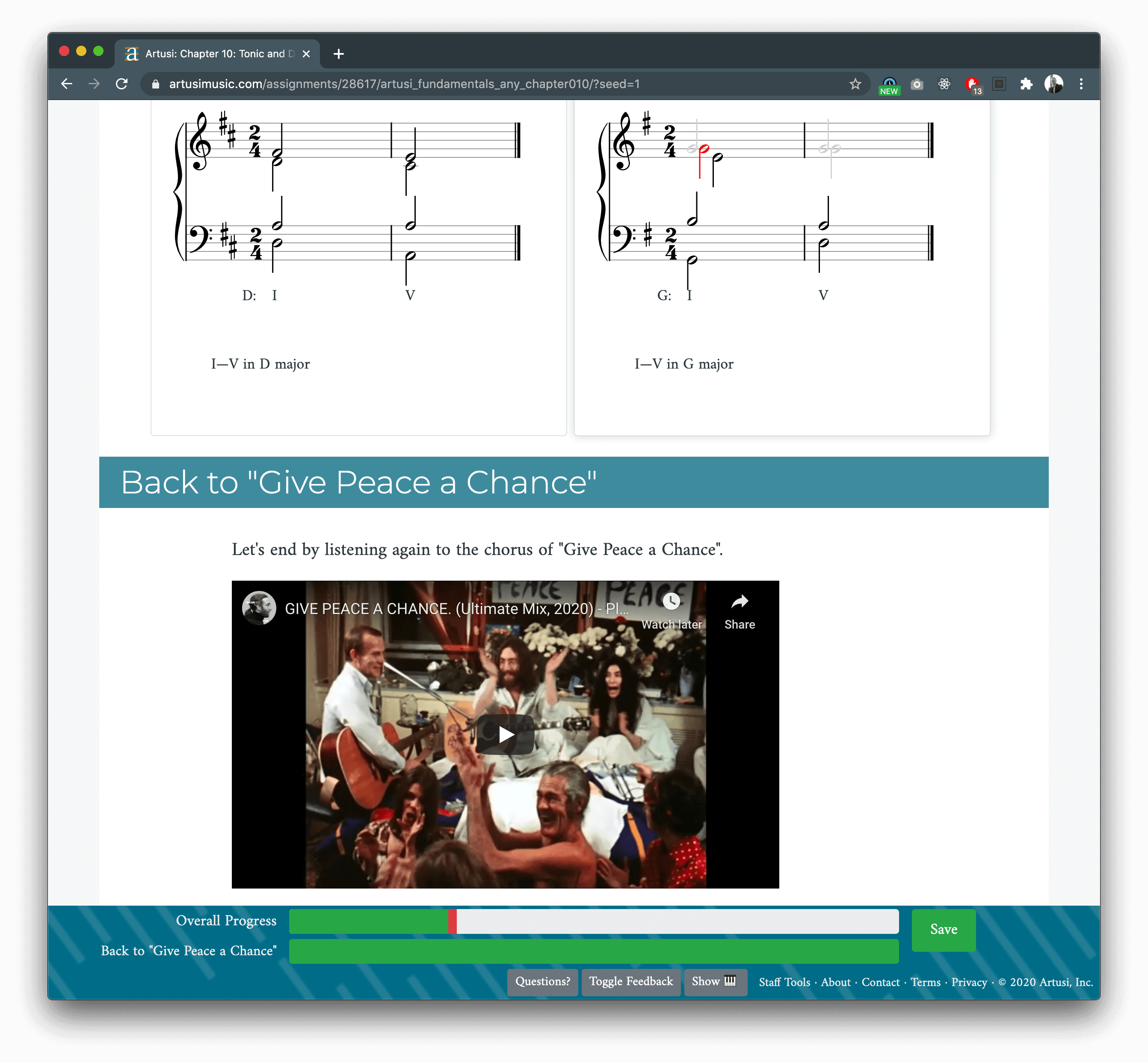
With embedded video and audio examples emphasizing the diversity of music worldwide, Artusi’s textbook enriches the learning experience by connecting musical concepts to real music from the very first page.
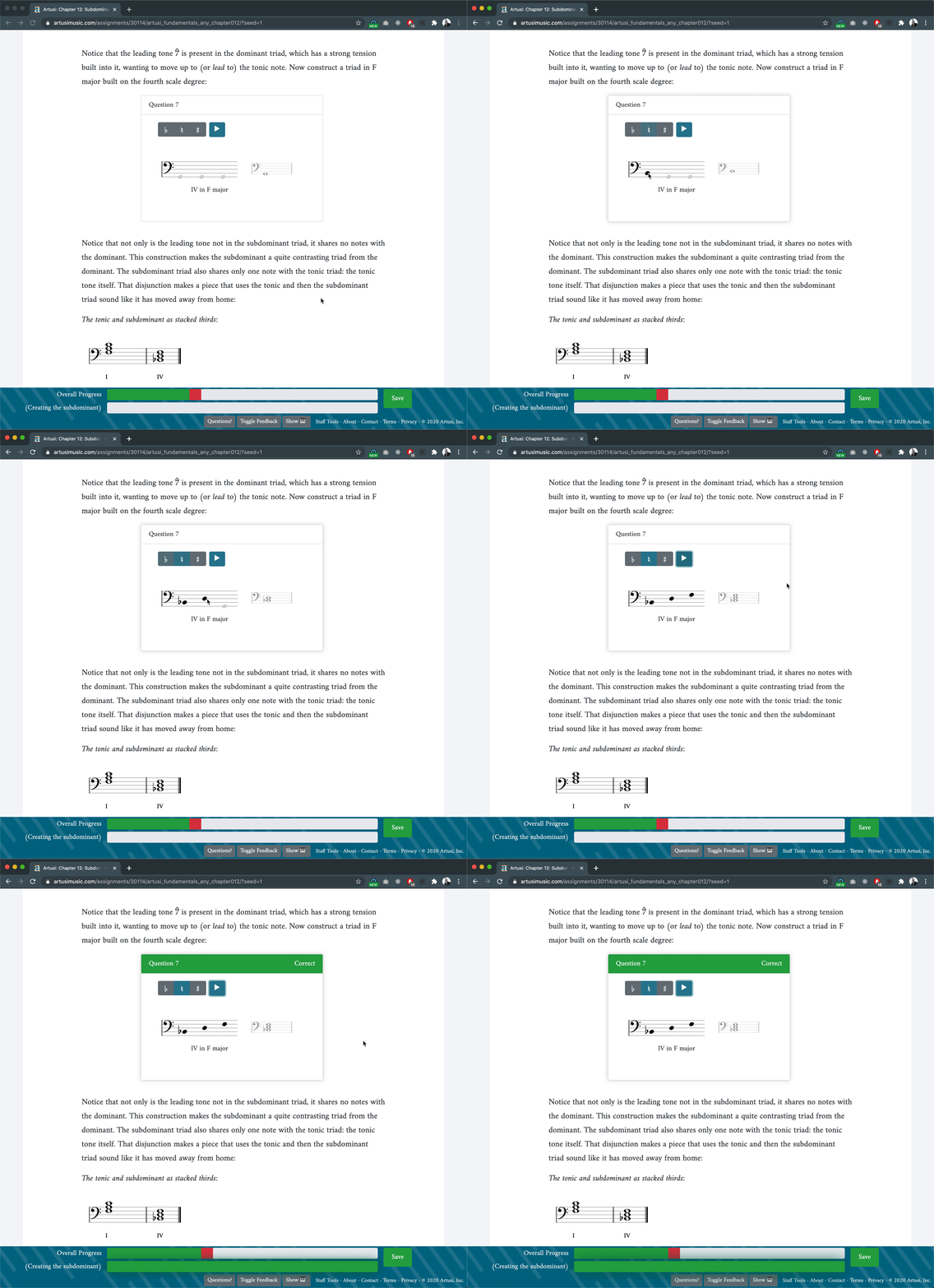
Our in-line, interactive questions encourage active learning. Rather than passively absorbing content, students can immediately apply their knowledge as they read—and receive immediate feedback.
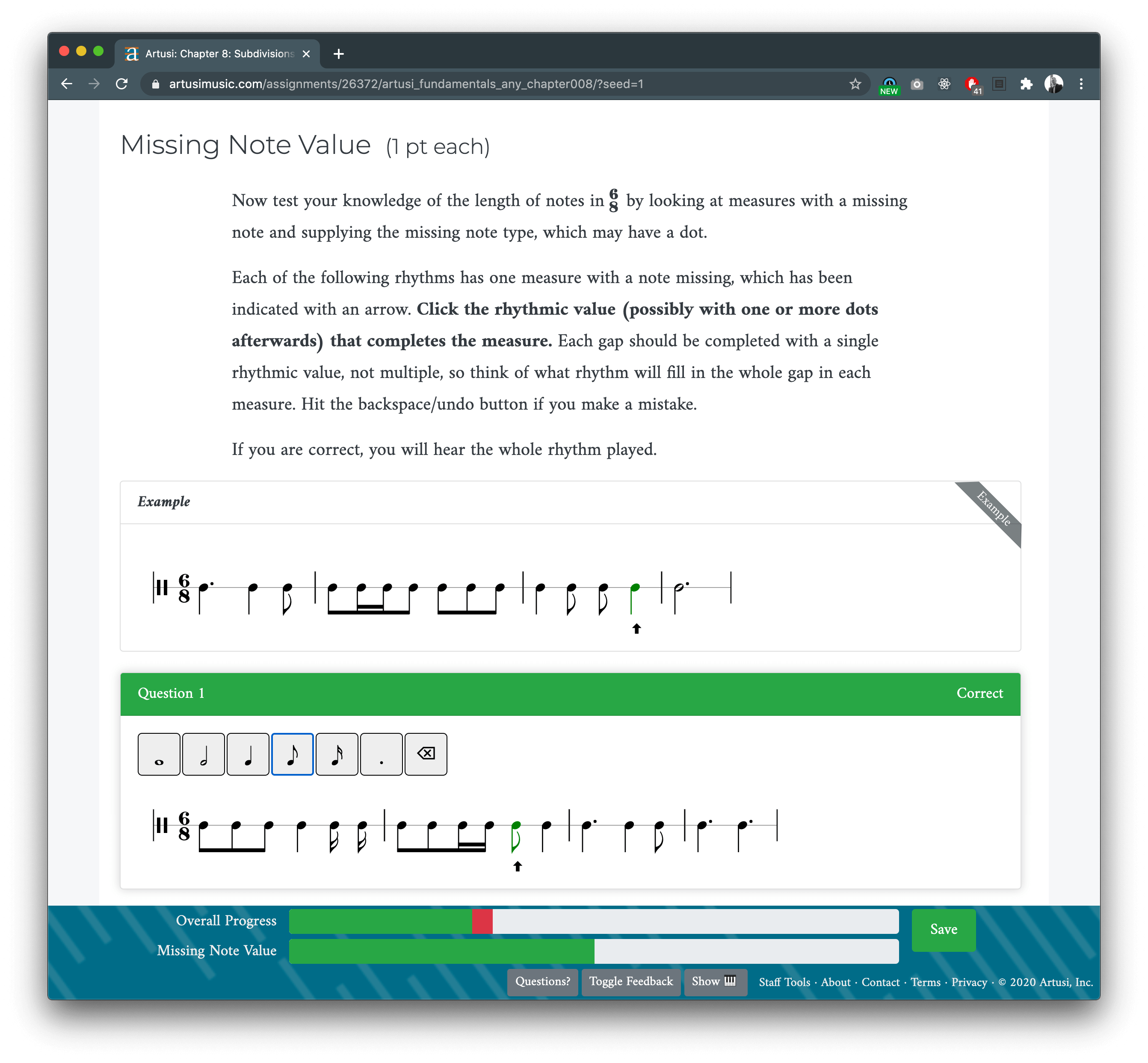
Artusi’s Interactive Music Fundamentals is just as customizable as our much-loved workbooks. Reorder, delete, or add chapters; or even edit the text with your own favorite examples. Artusi empowers your pedagogy from beginning to end.
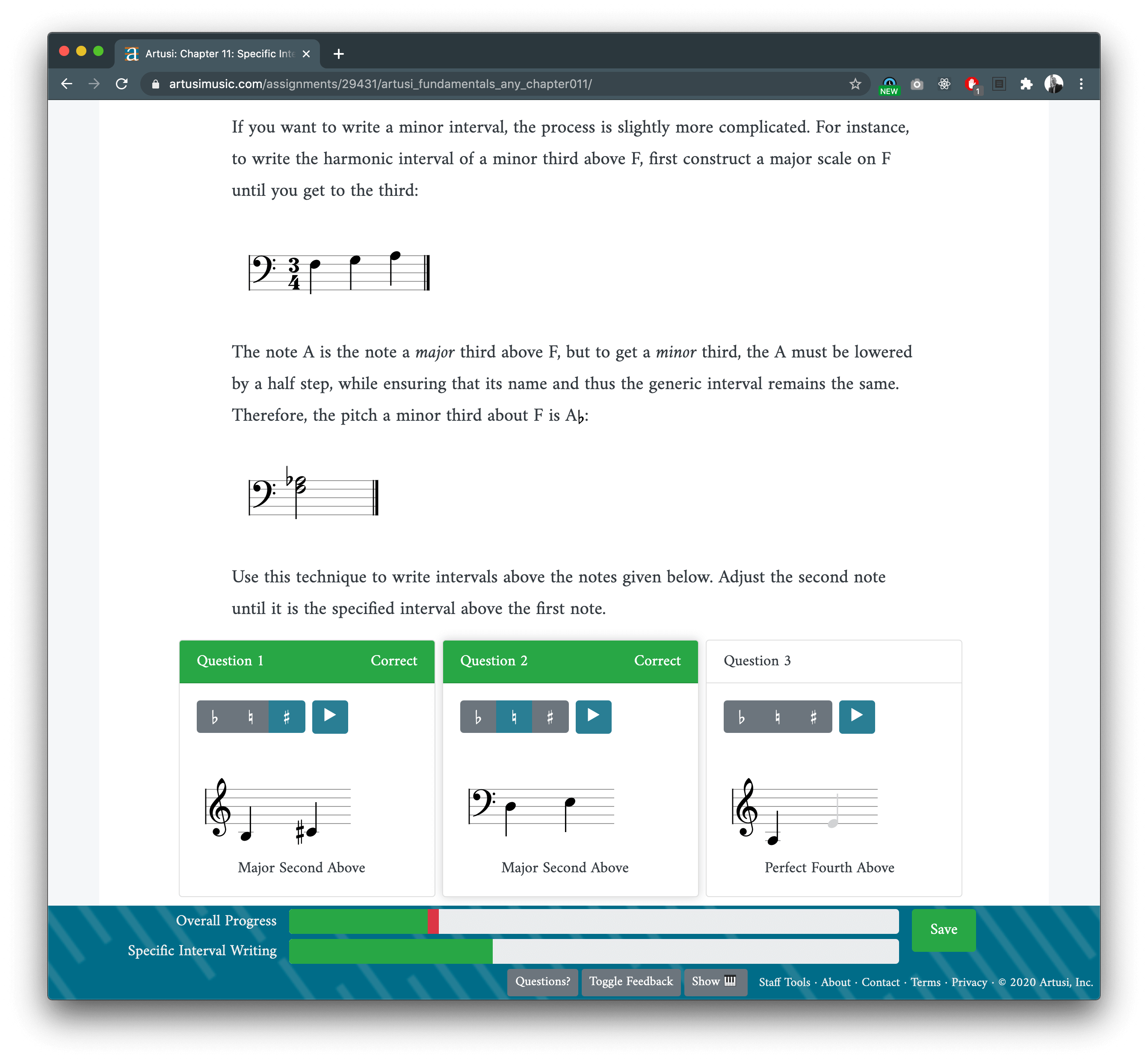
The best part of all: Artusi’s Interactive Music Fundamentals is included for FREE with an Artusi subscription!
Log in or create an account to access Artusi’s one-of-a-kind textbook, customizable workbooks, automatic grading, limitless practice exercises, and unparalleled support. We’ll even build your course materials for you!
Table of Contents
The entire textbook is customizable, including the table of contents!| Chapter 1: Rhythm: Beat and Meter | Try a sample chapter |
| Chapter 2: Rhythm and Note Types | |
| Chapter 3: Beams, Dots, and Ties | |
| Chapter 4: Pitch in Treble Clef | |
| Chapter 5: Bass Clef, Melodies, and Accidentals | |
| Chapter 6: Enharmonics, Whole Steps, and Half Steps | |
| Chapter 7: Scales and Generic Intervals | Try a sample chapter |
| Chapter 8: Subdivisions and Compound Meter | |
| Chapter 9: Major Scales | |
| Chapter 10: Tonic and Dominant Triads | |
| Chapter 11: Specific Intervals and Triad Types | |
| Chapter 12: Subdominant Triad and I-IV-V-I | |
| Chapter 13: Major Key Signatures and the Circle of Fifths | |
| Chapter 14: “Chives”: Non-Harmonic Passing and Neighbor tones | |
| Chapter 15: The Submediant Triad | |
| Chapter 16: Natural/Modal Minor | |
| Chapter 17: Harmonic and Melodic Minor | |
| Chapter 18: Consonance, Dissonance, and Chords in First Inversion | |
| Chapter 19: Chordal Dissonance and the Dominant Seventh | |